
Implementing Cellular V2X Communication for Real-Time Traffic Optimization in Smart City Grids

Implementing Cellular V2X Communication for Real-Time Traffic Optimization in Smart City Grids

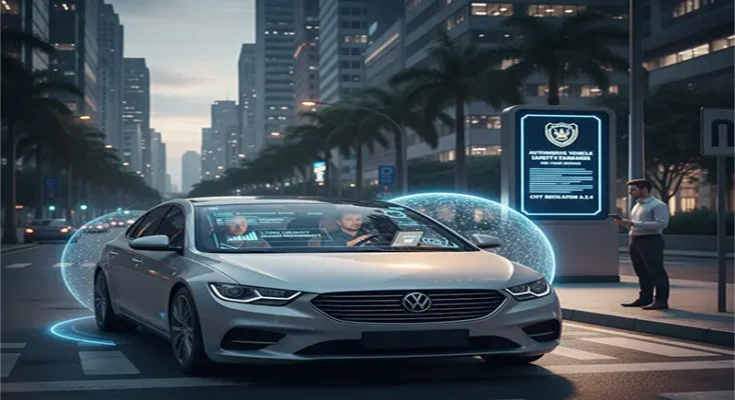
The dream of a “frictionless” city—where traffic jams are relics of the past and emergency vehicles glide through green lights without slowing—is no longer a science-fiction trope. In 2026, the global rollout of Cellular Vehicle-to-Everything (C-V2X) has transformed urban infrastructure into a living, digital nervous system. By shifting from a model of reactive driving to one of Cooperative Orchestration, smart city grids are now capable of optimizing traffic flow in real-time with millisecond precision.

Implementing this at scale requires a deep integration of 5G-Advanced standards, edge computing, and a fundamental shift in how we perceive vehicle data.

1. The Architecture of Connectivity: PC5 vs. Uu Interfaces

C-V2X is unique because it operates on a dual-mode communication architecture, standardized by 3GPP Release 18 (5G-Advanced). To optimize a city grid, both “lanes” of communication must be utilized:

  • The PC5 (Sidelink) Interface: This is the “short-range” direct communication mode. It operates
Implementing Cellular V2X Communication for Real-Time Traffic Optimization in Smart City Grids Read More
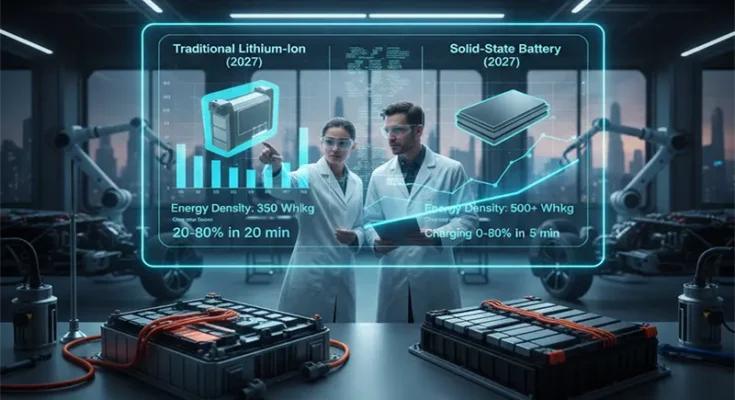
Comparing Solid-State Battery Energy Density and Charging Speeds vs. Traditional Lithium-Ion for 2027 EV Models

Comparing Solid-State Battery Energy Density and Charging Speeds vs. Traditional Lithium-Ion for 2027 EV Models

As we stand at the threshold of 2027, the automotive world is no longer just talking about the “battery of the future”—it is beginning to drive it. While traditional liquid-electrolyte lithium-ion (Li-ion) batteries have been the faithful workhorses of the first EV wave, a new contender has reached commercial maturity: the All-Solid-State Battery (ASSB).

For 2027 EV models, the comparison between these two technologies is not merely academic; it represents the difference between a vehicle that “manages” range and one that “eliminates” range anxiety.

1. The Energy Density Leap: Beyond 500 Wh/kg

In the world of batteries, energy density is the ultimate metric for portable power. Traditional lithium-ion cells, which use a liquid electrolyte and a graphite-based anode, are currently approaching their physical ceiling of approximately 250–300 Wh/kg.

By contrast, 2027 solid-state models are shattering this limit. By replacing the flammable liquid electrolyte with a solid ceramic or …

Comparing Solid-State Battery Energy Density and Charging Speeds vs. Traditional Lithium-Ion for 2027 EV Models Read More
Legal Liability and Safety Standards for Level 3 Autonomous Driving Systems in Urban Environments

Legal Liability and Safety Standards for Level 3 Autonomous Driving Systems in Urban Environments

The year 2026 marks a watershed moment for the automotive industry. After years of testing on geofenced highways, Level 3 (L3) autonomous driving systems—where the vehicle can handle all aspects of driving under specific conditions—are now navigating complex urban environments. Unlike Level 2 systems (where the human is always “the driver”), Level 3 introduces a revolutionary and legally challenging state: the human becomes a “User-in-Charge” (UiC), a passenger who must be ready to intervene only when prompted.

As these vehicles merge into the chaotic flow of city traffic, the legal and engineering communities have established a robust framework to manage the shifting sands of liability and safety.

1. The Transition of Control: The “Handover” Problem

The most critical safety risk in Level 3 automation occurs during the Transition Demand (TD). This is the moment the system encounters a situation outside its Operational Design Domain (ODD)—such as an …

Legal Liability and Safety Standards for Level 3 Autonomous Driving Systems in Urban Environments Read More
How Software-Defined Vehicle (SDV) Platforms Enable Features-on-Demand and Subscription Revenue for OEMs

How Software-Defined Vehicle (SDV) Platforms Enable Features-on-Demand and Subscription Revenue for OEMs

The automotive industry is undergoing its most significant structural change since the introduction of the assembly line. We are moving away from the era of “Horsepower and Chrome” toward an era of “Bits and Bytes.” By 2026, the car is no longer just a mechanical product; it is a Software-Defined Vehicle (SDV)—a programmable, evolving platform that serves as a mobile data center.

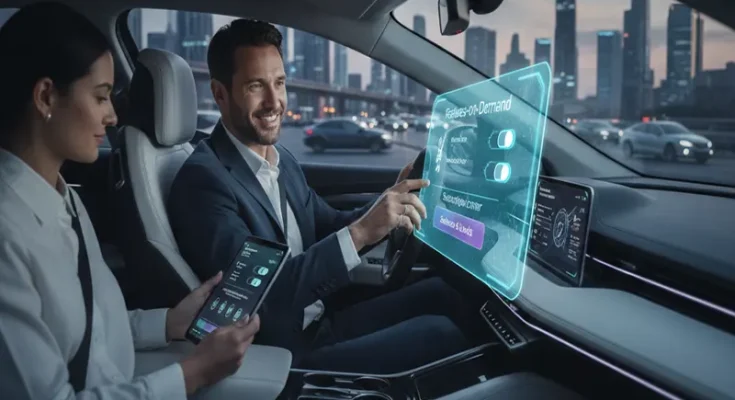
For Original Equipment Manufacturers (OEMs), this shift isn’t just about technology; it’s about a fundamental transformation of their business models. The SDV enables a “Features-on-Demand” (FoD) strategy that turns a one-time vehicle sale into a multi-year, high-margin subscription relationship.

1. The Architectural Shift: From ECUs to Zonal Computing

Traditional vehicle architecture was a “patchwork” of up to 150 separate Electronic Control Units (ECUs), each dedicated to a single function like power windows or engine timing. This distributed model made it nearly impossible to update the car’s software …

How Software-Defined Vehicle (SDV) Platforms Enable Features-on-Demand and Subscription Revenue for OEMs Read More
Reasons Why You Should Choose a car shipping service

Reasons Why You Should Choose a car shipping service

With the increasing economy and affordability, the ownership and use of private vehicles are increasing rapidly. And with globalization, people move base from one place to another at a significant speed.

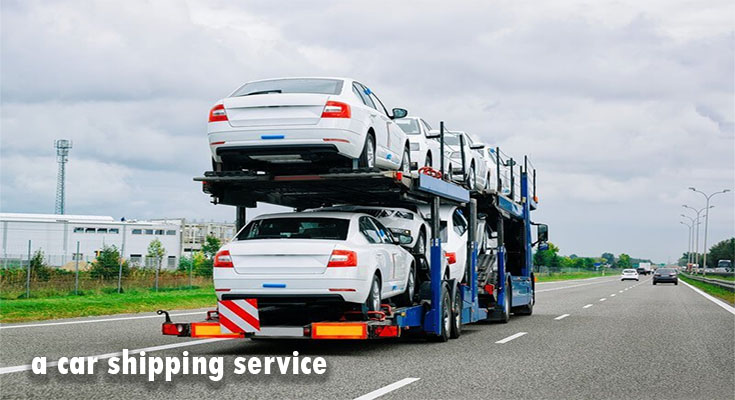
There are times when you need to send a car from one part of the country to another. Maybe you’ve bought a car online from a private party or dealer in another state, or maybe you’ve moved for a new job. Maybe you want to send the car to a relative.

There are other scenarios too, like moving across the country in a classic car, where it almost always makes more sense for you to ship your car than to drive it. While road trips are fun and exciting, they come with many challenges. But sometimes, it also becomes tedious and tiring if you have fewer people with you or are driving alone.

Your vehicle is one of the …

Reasons Why You Should Choose a car shipping service Read More