

The Semiconductor Revolution: Upgrading to Aftermarket Silicon Carbide (SiC) Inverter Modules

The Semiconductor Revolution: Upgrading to Aftermarket Silicon Carbide (SiC) Inverter Modules

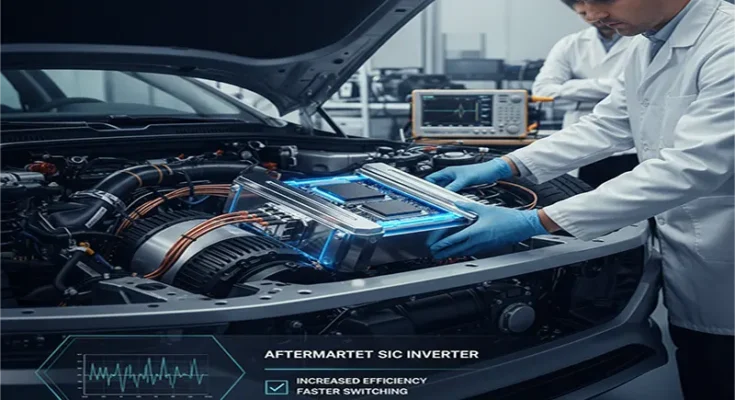
In the early years of the electric vehicle transition, performance was a product of software limits and battery cell discharge rates. However, as we enter 2026, the enthusiast community has identified a new mechanical ceiling: the silicon-based inverter. For owners of aging 400V platforms (2018–2022) or those building custom high-output drivetrains, the transition to Silicon Carbide (SiC) MOSFET-based inverters is the equivalent of a “turbo swap” for the digital age.

By replacing traditional Silicon (Si) Insulated-Gate Bipolar Transistors (IGBTs) with SiC power modules, tuners are unlocking higher efficiencies, reduced thermal bottlenecks, and a significant expansion of the motor’s usable power band.

1. Beyond the IGBT Limit: The Wide Bandgap Advantage

For decades, the standard for power conversion has been the Silicon IGBT. While robust, these transistors suffer from a fundamental physical limitation: switching losses. Because silicon has a relatively narrow bandgap, it requires significant energy to “turn on” and …

The Semiconductor Revolution: Upgrading to Aftermarket Silicon Carbide (SiC) Inverter Modules Read More
Reducing Drag, Adding Miles: Upgrading to Lightweight Aerodynamic Suspension for Improved EV Highway Range

Reducing Drag, Adding Miles: Upgrading to Lightweight Aerodynamic Suspension for Improved EV Highway Range

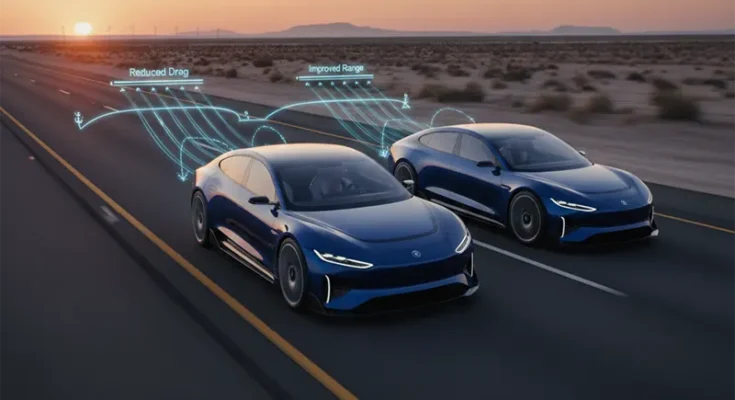
In the early days of the electric vehicle revolution, range was a game of “brute force”: if you wanted to go further, you simply added more battery cells. But as the market matures in 2026, a new philosophy has taken hold among efficiency enthusiasts: Mechanical Refinement.

While exterior body panels get all the aerodynamic credit, the vehicle’s underbody—specifically the suspension system—remains one of the “dirtiest” areas for airflow. Modern EV owners are now looking beneath the chassis, replacing heavy, blocky factory components with lightweight, airfoil-shaped alternatives to squeeze every possible mile out of a single charge.

1. The Hidden Range Killer: Unsprung Mass and Drag

Suspension components are unique because they constitute unsprung mass—the parts of the car not supported by the springs (wheels, tires, brakes, and control arms).

From a physics perspective, unsprung mass is a double-edged sword. Not only does it require more energy to move …

Reducing Drag, Adding Miles: Upgrading to Lightweight Aerodynamic Suspension for Improved EV Highway Range Read More
Stopping the Rust: The Best Corrosion-Resistant Rotors and Low-Dust Pads for EVs

Stopping the Rust: The Best Corrosion-Resistant Rotors and Low-Dust Pads for EVs

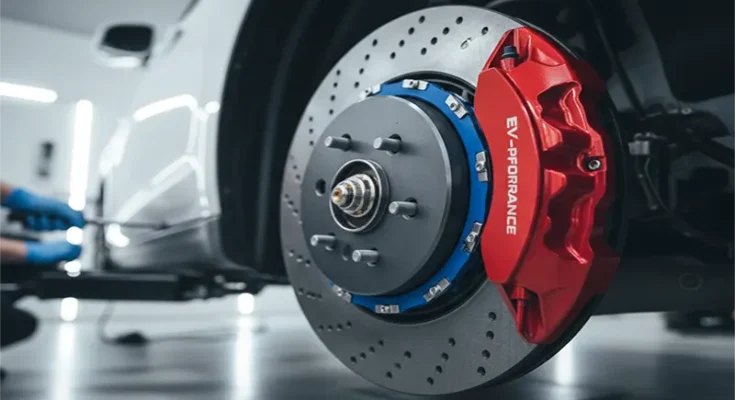
In the world of internal combustion engines (ICE), brake wear is a matter of friction. In the world of electric vehicles (EVs), brake failure is a matter of chemistry. As we enter 2026, a growing number of first-generation EV owners are facing a “Corrosion Paradox”: their brake pads have 90% of their life remaining, yet the entire system must be replaced because the rotors are pitted with rust and the pads are delaminating from their backing plates.

Because regenerative braking handles the vast majority of deceleration, the physical friction brakes often sit cold and idle. This lack of heat allows moisture and road salt to linger, turning your braking system into a breeding ground for oxidation. To prevent this, EV owners need to move beyond “standard” parts and look toward specialized, corrosion-resistant technologies.

1. The Regenerative Paradox: Why EV Brakes Fail Early

In a traditional car, every stop generates enough …

Stopping the Rust: The Best Corrosion-Resistant Rotors and Low-Dust Pads for EVs Read More
Thermal Longevity: Replacing High-Voltage Coolant Pumps and Thermal Interface Materials in Aging EV Battery Packs

Thermal Longevity: Replacing High-Voltage Coolant Pumps and Thermal Interface Materials in Aging EV Battery Packs

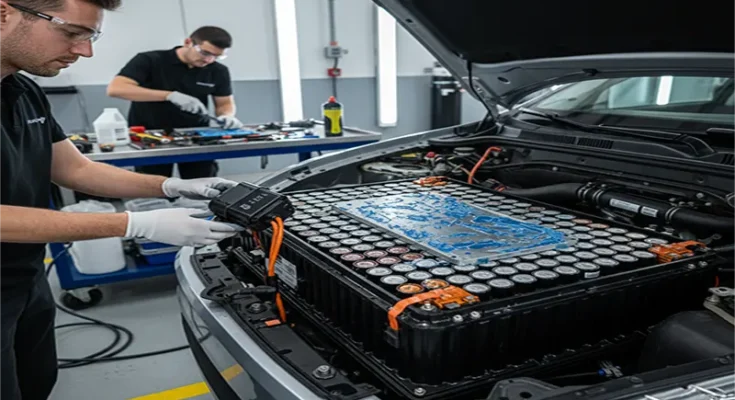
As the first generation of mass-market electric vehicles—such as the early Tesla Model S, BMW i3, and Chevrolet Volt—surpasses the decade mark, the focus of the secondary market is shifting. While much of the public discourse centers on battery cell degradation, independent technicians and “Right to Repair” advocates are discovering a different reality: the supporting thermal infrastructure often fails long before the lithium-ion cells do.

In these aging packs, two critical failure points emerge: the mechanical fatigue of High-Voltage (HV) coolant pumps and the chemical breakdown of Thermal Interface Materials (TIM). If left unaddressed, these issues lead to localized hot spots, accelerated capacity loss, and eventually, catastrophic thermal runaway.

1. The Silent Killers of Old Packs: Pump Fatigue and TIM Degradation

In the EV world, thermal management is the primary determinant of longevity. While an internal combustion engine’s cooling system primarily prevents the warping of metal, an EV’s cooling …

Thermal Longevity: Replacing High-Voltage Coolant Pumps and Thermal Interface Materials in Aging EV Battery Packs Read More
Implementing Cellular V2X Communication for Real-Time Traffic Optimization in Smart City Grids

Implementing Cellular V2X Communication for Real-Time Traffic Optimization in Smart City Grids

The dream of a “frictionless” city—where traffic jams are relics of the past and emergency vehicles glide through green lights without slowing—is no longer a science-fiction trope. In 2026, the global rollout of Cellular Vehicle-to-Everything (C-V2X) has transformed urban infrastructure into a living, digital nervous system. By shifting from a model of reactive driving to one of Cooperative Orchestration, smart city grids are now capable of optimizing traffic flow in real-time with millisecond precision.

Implementing this at scale requires a deep integration of 5G-Advanced standards, edge computing, and a fundamental shift in how we perceive vehicle data.

1. The Architecture of Connectivity: PC5 vs. Uu Interfaces

C-V2X is unique because it operates on a dual-mode communication architecture, standardized by 3GPP Release 18 (5G-Advanced). To optimize a city grid, both “lanes” of communication must be utilized:

  • The PC5 (Sidelink) Interface: This is the “short-range” direct communication mode. It operates
Implementing Cellular V2X Communication for Real-Time Traffic Optimization in Smart City Grids Read More