
Thermal Longevity: Replacing High-Voltage Coolant Pumps and Thermal Interface Materials in Aging EV Battery Packs
As the first generation of mass-market electric vehicles—such as the early Tesla Model S, BMW i3, and Chevrolet Volt—surpasses the decade mark, the focus of the secondary market is shifting. While much of the public discourse centers on battery cell degradation, independent technicians and “Right to Repair” advocates are discovering a different reality: the supporting thermal infrastructure often fails long before the lithium-ion cells do.
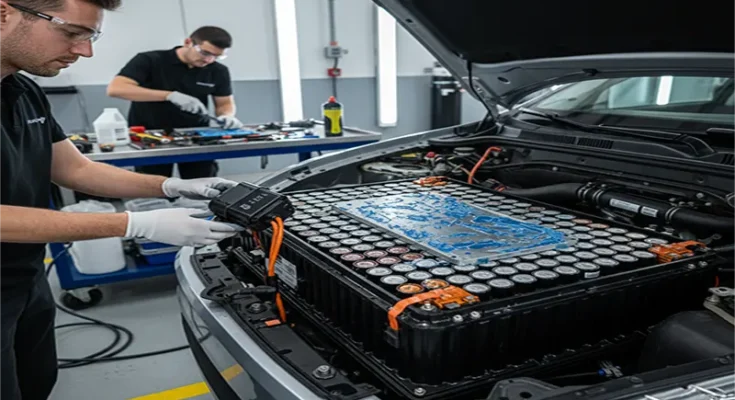
In these aging packs, two critical failure points emerge: the mechanical fatigue of High-Voltage (HV) coolant pumps and the chemical breakdown of Thermal Interface Materials (TIM). If left unaddressed, these issues lead to localized hot spots, accelerated capacity loss, and eventually, catastrophic thermal runaway.
1. The Silent Killers of Old Packs: Pump Fatigue and TIM Degradation
In the EV world, thermal management is the primary determinant of longevity. While an internal combustion engine’s cooling system primarily prevents the warping of metal, an EV’s cooling …
Thermal Longevity: Replacing High-Voltage Coolant Pumps and Thermal Interface Materials in Aging EV Battery Packs Read More