
Search Dealership Inventory by Monthly Budget for Low-Interest Certified Pre-Owned SUVs

Search Dealership Inventory by Monthly Budget for Low-Interest Certified Pre-Owned SUVs

In the high-interest climate of early 2026, the traditional car-buying strategy of “negotiating the total price first” has been flipped on its head. For many families, the real question isn’t whether an SUV costs $40,000 or $45,000, but whether it costs $600 or $800 a month.

This transition to Payment-First Search is more than just a convenience; it is a tactical necessity. By targeting Certified Pre-Owned (CPO) vehicles, buyers can unlock “subvented” interest rates that are often half the cost of standard used car loans. Here is how to navigate the digital inventory landscape of 2026 to find a low-interest CPO SUV that fits your monthly budget.

1. The Shift to Affordability-Based Search

In 2026, major automotive platforms like Cars.com, Edmunds, and OEM manufacturer sites have moved away from simple price filters. They now utilize Desking Intelligence—algorithms that integrate real-time APR incentives and your specific credit profile to show …

Search Dealership Inventory by Monthly Budget for Low-Interest Certified Pre-Owned SUVs Read More
Comparing Solid-State Battery Energy Density and Charging Speeds vs. Traditional Lithium-Ion for 2027 EV Models

Comparing Solid-State Battery Energy Density and Charging Speeds vs. Traditional Lithium-Ion for 2027 EV Models

As we stand at the threshold of 2027, the automotive world is no longer just talking about the “battery of the future”—it is beginning to drive it. While traditional liquid-electrolyte lithium-ion (Li-ion) batteries have been the faithful workhorses of the first EV wave, a new contender has reached commercial maturity: the All-Solid-State Battery (ASSB).

For 2027 EV models, the comparison between these two technologies is not merely academic; it represents the difference between a vehicle that “manages” range and one that “eliminates” range anxiety.

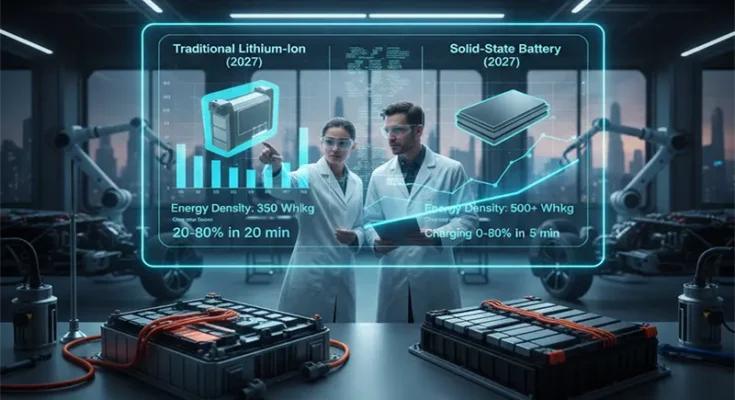
1. The Energy Density Leap: Beyond 500 Wh/kg

In the world of batteries, energy density is the ultimate metric for portable power. Traditional lithium-ion cells, which use a liquid electrolyte and a graphite-based anode, are currently approaching their physical ceiling of approximately 250–300 Wh/kg.

By contrast, 2027 solid-state models are shattering this limit. By replacing the flammable liquid electrolyte with a solid ceramic or …

Comparing Solid-State Battery Energy Density and Charging Speeds vs. Traditional Lithium-Ion for 2027 EV Models Read More
Legal Liability and Safety Standards for Level 3 Autonomous Driving Systems in Urban Environments

Legal Liability and Safety Standards for Level 3 Autonomous Driving Systems in Urban Environments

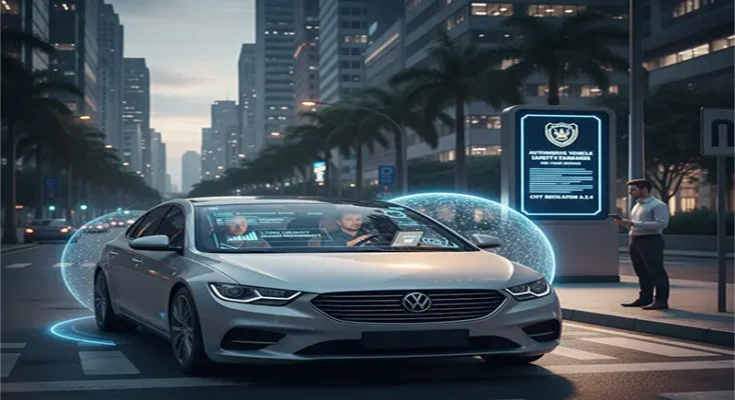
The year 2026 marks a watershed moment for the automotive industry. After years of testing on geofenced highways, Level 3 (L3) autonomous driving systems—where the vehicle can handle all aspects of driving under specific conditions—are now navigating complex urban environments. Unlike Level 2 systems (where the human is always “the driver”), Level 3 introduces a revolutionary and legally challenging state: the human becomes a “User-in-Charge” (UiC), a passenger who must be ready to intervene only when prompted.

As these vehicles merge into the chaotic flow of city traffic, the legal and engineering communities have established a robust framework to manage the shifting sands of liability and safety.

1. The Transition of Control: The “Handover” Problem

The most critical safety risk in Level 3 automation occurs during the Transition Demand (TD). This is the moment the system encounters a situation outside its Operational Design Domain (ODD)—such as an …

Legal Liability and Safety Standards for Level 3 Autonomous Driving Systems in Urban Environments Read More
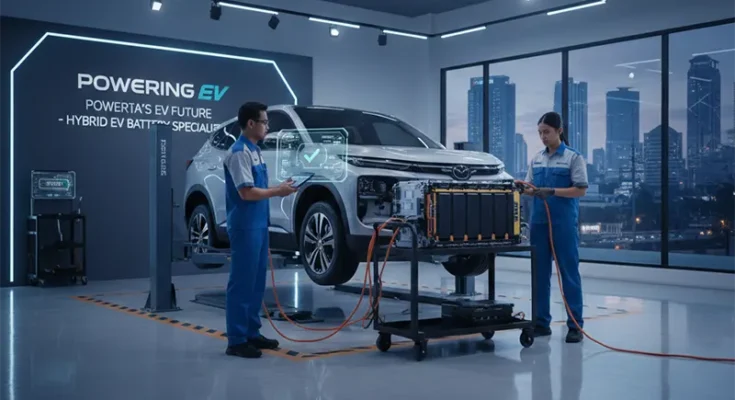
Certified Dealership Service for Hybrid and EV Battery Health Checks in Jakarta

Certified Dealership Service for Hybrid and EV Battery Health Checks in Jakarta

As Jakarta accelerates its transition toward a greener horizon in 2026, the local automotive landscape has shifted its focus from the odometer to the “Battery Passport.” With the streets of the capital now populated by a diverse fleet ranging from the ubiquitous Toyota Kijang Innova Zenix HEV to the high-performance BYD Seal, the “Health Check” has become the most critical maintenance ritual for Indonesian vehicle owners.

In a city defined by extreme tropical humidity and grueling stop-and-go traffic, the certified dealership service is no longer just a recommendation—it is the gatekeeper of your vehicle’s performance and future resale value.

1. The Jakarta Context: Why “Battery Health” is the New “Mileage”

Jakarta presents a unique set of challenges for lithium-ion and nickel-metal hydride (NiMH) batteries. The relentless 32°C average temperature, combined with hours spent idling in Sudirman or Gatot Subroto traffic, creates a high-heat environment that can accelerate chemical degradation.

In …

Certified Dealership Service for Hybrid and EV Battery Health Checks in Jakarta Read More
How Software-Defined Vehicle (SDV) Platforms Enable Features-on-Demand and Subscription Revenue for OEMs

How Software-Defined Vehicle (SDV) Platforms Enable Features-on-Demand and Subscription Revenue for OEMs

The automotive industry is undergoing its most significant structural change since the introduction of the assembly line. We are moving away from the era of “Horsepower and Chrome” toward an era of “Bits and Bytes.” By 2026, the car is no longer just a mechanical product; it is a Software-Defined Vehicle (SDV)—a programmable, evolving platform that serves as a mobile data center.

For Original Equipment Manufacturers (OEMs), this shift isn’t just about technology; it’s about a fundamental transformation of their business models. The SDV enables a “Features-on-Demand” (FoD) strategy that turns a one-time vehicle sale into a multi-year, high-margin subscription relationship.

1. The Architectural Shift: From ECUs to Zonal Computing

Traditional vehicle architecture was a “patchwork” of up to 150 separate Electronic Control Units (ECUs), each dedicated to a single function like power windows or engine timing. This distributed model made it nearly impossible to update the car’s software …

How Software-Defined Vehicle (SDV) Platforms Enable Features-on-Demand and Subscription Revenue for OEMs Read More